Today
20
in History
26
January
February
March
April
May
June
July
August
September
October
November
December
01
Sun
02
Mon
03
Tue
04
Wed
05
Thu
06
Fri
07
Sat
08
Sun
09
Mon
10
Tue
11
Wed
12
Thu
13
Fri
14
Sat
15
Sun
16
Mon
17
Tue
18
Wed
19
Thu
20
Fri
21
Sat
22
Sun
23
Mon
24
Tue
25
Wed
26
Thu
27
Fri
28
Sat
29
Sun
30
Mon
31
Tue
...
03-25-1941
Yugoslavia joins the Axis Powers
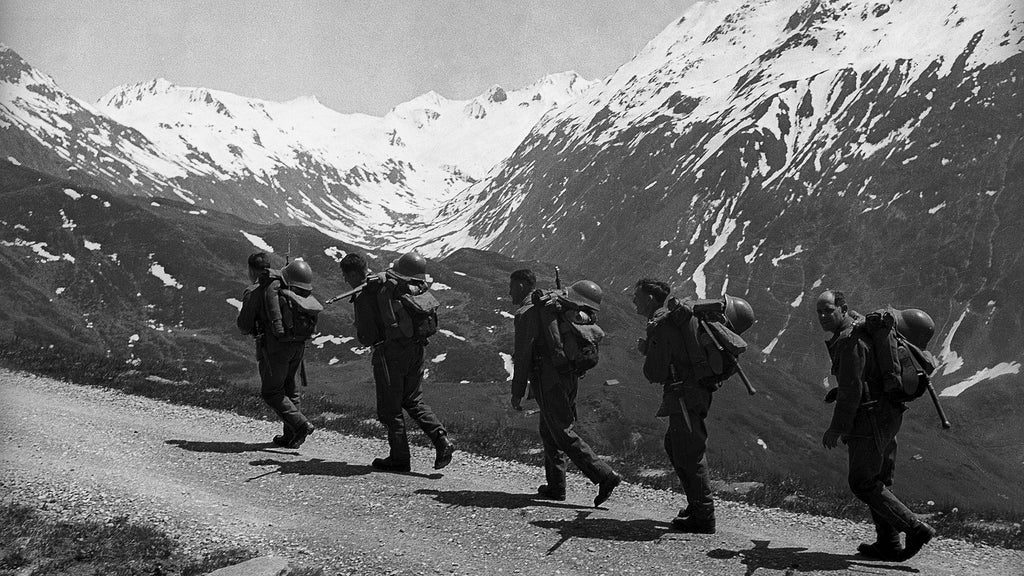
Yugoslavia, despite an early declaration of neutrality, signs the Tripartite Pact, forming an alliance with Axis powers Germany, Italy and Japan.
A unified nation of Yugoslavia, an uneasy federation of Serbs, Croats and Slovenes, was a response to the collapse of the Ottoman and Hapsburg empires at the close of World War I, both of which had previously contained parts of what became Yugoslavia. A constitutional monarchy, Yugoslavia built friendships with France and Czechoslovakia during the years between the world wars. With the outbreak of World War II, and the Anschluss (“union”) between Austria and Germany, pressure was placed on Yugoslavia to more closely ally itself with Germany, despite Yugoslavia’s declared neutrality. But fear of an invasion like that suffered by France pushed Yugoslavia into signing a “Friendship Treaty”—something short of a formal political alliance—on December 11, 1940.
With the war spreading to the Balkans after the invasion of Greece by Italy, it was important to Hitler that the Axis powers have an ally in the region that would act as a bulwark against Allied encroachment on Axis territory. Meeting on February 14, 1941, Adolf Hitler proved unable to persuade Yugoslav Prime Minister Dragisa Cvetkovic to formally join the Axis. The next day, British Prime Minister Winston Churchill contacted the Yugoslav regent, Prince Paul, in an effort to encourage him to remain firm in resisting further German blandishments. It was essential to the Allies that Yugoslavia cooperate with Anglo-Greek forces in fending off an Axis conquest of Greece.
But with King Boris of Bulgaria caving into Germany, Prince Paul felt the heat of the Nazis, and on March 20 he asked the Yugoslav Cabinet for their cooperation in allowing the Germans access to Greece through Yugoslavia. The Cabinet balked, and four ministers resigned in protest at the suggestion. This gesture failed to prevent Prime Minister Cvetkovic from finally signing the Tripartite Pact in Vienna on March 25, 1941.
Within two days, the Cvetkovic government was overthrown by a unified front of peasants, the church, unions and the military—an angry response to the alliance with Germany. The new government, led by Air Force Gen. Dusan Simovic, immediately renounced the Tripartite Pact. In less than two weeks, Germany invaded the nation and occupied it by force.
More news today
loading...