Today
20
in History
26
January
February
March
April
May
June
July
August
September
October
November
December
01
Wed
02
Thu
03
Fri
04
Sat
05
Sun
06
Mon
07
Tue
08
Wed
09
Thu
10
Fri
11
Sat
12
Sun
13
Mon
14
Tue
15
Wed
16
Thu
17
Fri
18
Sat
19
Sun
20
Mon
21
Tue
22
Wed
23
Thu
24
Fri
25
Sat
26
Sun
27
Mon
28
Tue
29
Wed
30
Thu
...
04-27-1994
South Africa holds first multiracial elections
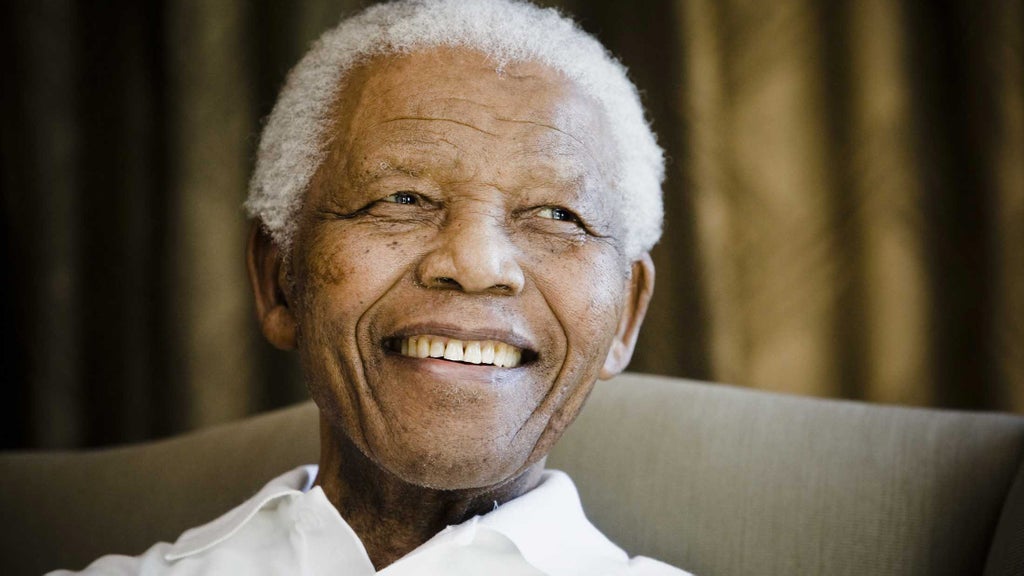
More than 22 million South Africans turn out to cast ballots in the country’s first multiracial parliamentary elections. An overwhelming majority chose anti-apartheid leader Nelson Mandela to head a new coalition government that included his African National Congress Party, former President F.W. de Klerk’s National Party, and Zulu leader Mangosuthu Buthelezi’s Inkatha Freedom Party. In May, Mandela was inaugurated as president, becoming South Africa’s first Black head of state.
In 1944, Mandela, a lawyer, joined the African National Congress (ANC), the oldest Black political organization in South Africa, where he became a leader of Johannesburg’s youth wing of the ANC. In 1952, he became deputy national president of the ANC, advocating nonviolent resistance to apartheid–South Africa’s institutionalized system of white supremacy and racial segregation. However, after the massacre of peaceful Black demonstrators at Sharpeville in 1960, Mandela helped organize a paramilitary branch of the ANC to engage in guerrilla warfare against the white minority government.
In 1961, he was arrested for treason, and although acquitted he was arrested again in 1962 for illegally leaving the country. Convicted and sentenced to five years at Robben Island Prison, he was put on trial again in 1964 on charges of sabotage. In June 1964, he was convicted along with several other ANC leaders and sentenced to life in prison.
Mandela spent the first 18 of his 27 years in jail at the brutal Robben Island Prison. Confined to a small cell without a bed or plumbing, he was forced to do hard labor in a quarry. He could write and receive a letter once every six months, and once a year he was allowed to meet with a visitor for 30 minutes. However, Mandela’s resolve remained unbroken, and while remaining the symbolic leader of the anti-apartheid movement, he led a movement of civil disobedience at the prison that coerced South African officials into drastically improving conditions on Robben Island. He was later moved to another location, where he lived under house arrest.
In 1989, F.W. de Klerk became South Africa’s president and set about dismantling apartheid. De Klerk lifted the ban on the ANC, suspended executions, and in February 1990 ordered the release of Nelson Mandela.
Mandela subsequently led the ANC in its negotiations with the minority government for an end to apartheid and the establishment of a multiracial government. In 1993, Mandela and de Klerk were jointly awarded the Nobel Peace Prize. One year later, the ANC won an electoral majority in the country’s first free elections, and Mandela was elected South Africa’s president, a position he held until 1999.
More news today
loading...