Today
20
in History
26
January
February
March
April
May
June
July
August
September
October
November
December
01
Tue
02
Wed
03
Thu
04
Fri
05
Sat
06
Sun
07
Mon
08
Tue
09
Wed
10
Thu
11
Fri
12
Sat
13
Sun
14
Mon
15
Tue
16
Wed
17
Thu
18
Fri
19
Sat
20
Sun
21
Mon
22
Tue
23
Wed
24
Thu
25
Fri
26
Sat
27
Sun
28
Mon
29
Tue
30
Wed
...
09-25-1933
Turin Shroud: Holy Relic or Fake?
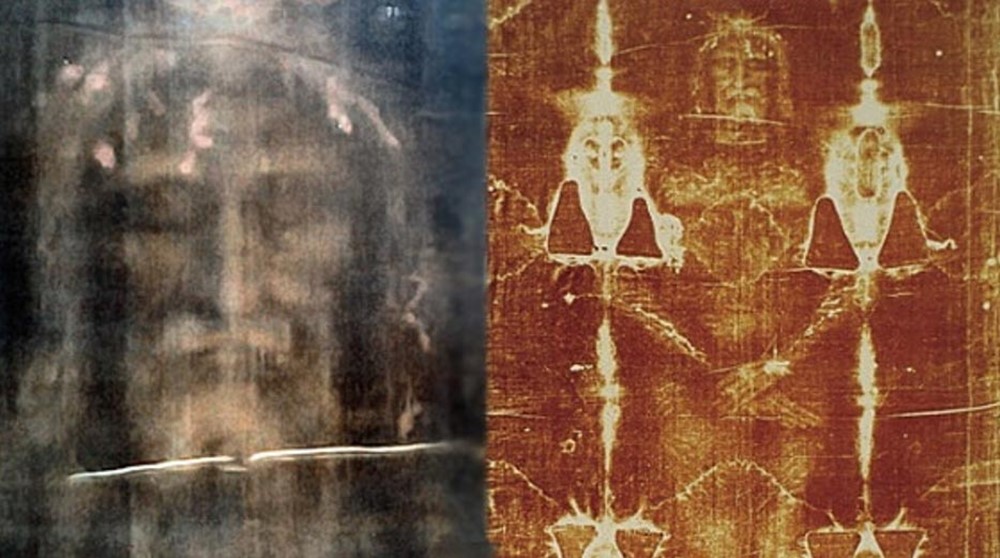
September 25, 1933 — The Turin Shroud, supposedly the burial cloth Jesus was wrapped in after his crucifixion, was put on display publicly on this day for the first time in 400 years.
And it caused quite a stir at the Cathedral of St. John the Baptist in Turin, Italy, where more than 25,000 people were to turn up and gaze in awe at the relic.
The stained cloth, 14-feet (4.2 metres) long, clearly shows the imprint of a body, front and back, and a man’s face with his eyes closed. The crowds of believers who turned up at the cathedral had no doubt about the identity of the figure, convinced that the stains were the blood of Christ.
But the shroud has been controversial since it was first revealed to the public over 600 years ago.
In 1390, French bishop Pierre d'Arcis wrote to Pope Clement VII saying that the shroud was "a clever sleight of hand" by someone "falsely declaring this was the actual shroud in which Jesus was enfolded in the tomb. [The purpose] is to attract the multitude so that money might cunningly be wrung from them."
Modern carbon dating suggests that the shroud dates to between 1260 and 1390. Jesus is generally believed to have died in the year 33. And in 1979 a panel called the Turin Commission concluded it is likely that the stains are pigments, not blood.
Many studies have concluded that the shroud is not authentic, the last being in 2018 when a group of forensic scientists reported in the Journal of Forensic Science that the shroud was artificially created.
But what of the Roman Catholic Church? It has never accepted – or entirely rejected – claims about the shroud. Officially, it considers the shroud to be an icon, not a holy relic.
More news today
loading...